
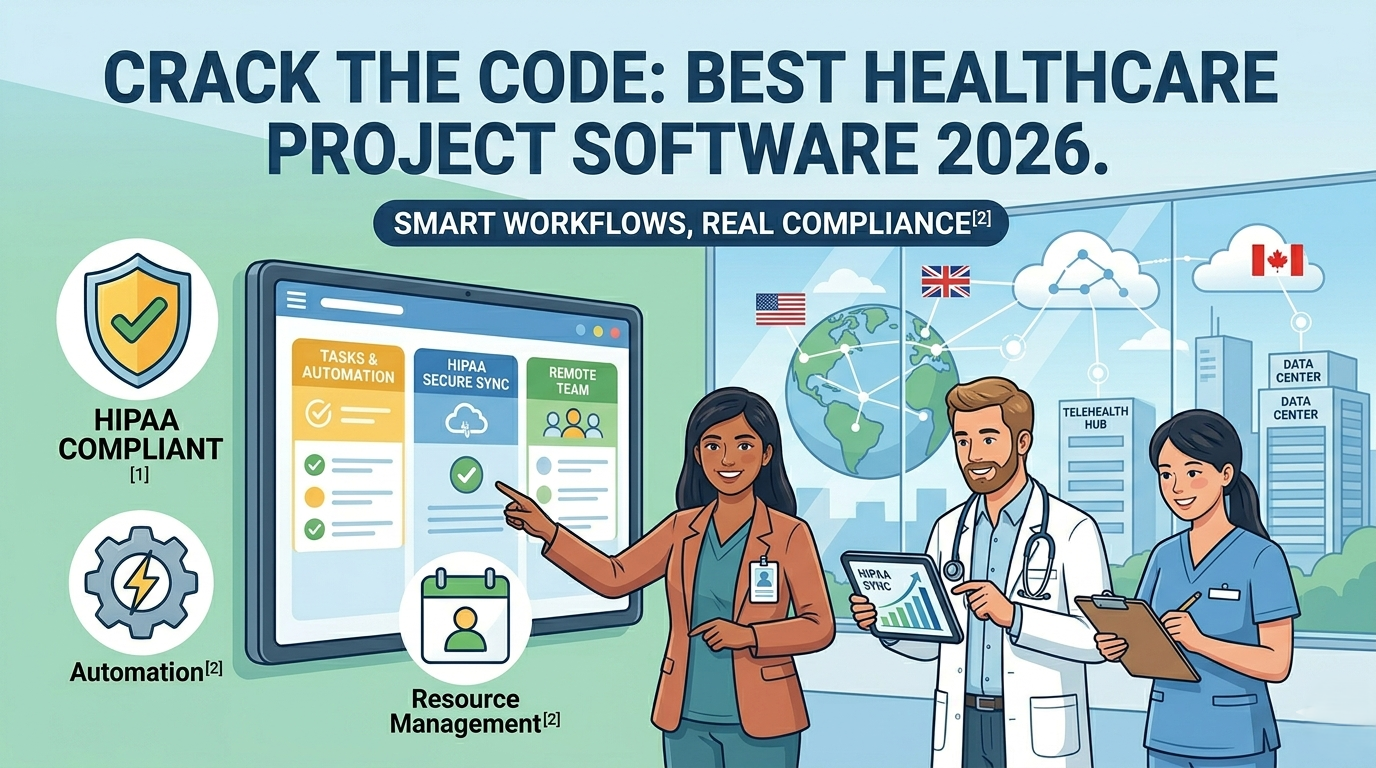
Is your healthcare team drowning in sticky notes, endless email threads, and “quick” phone calls that take 20 minutes?
In a world where every second counts, healthcare professionals shouldn’t be fighting with clunky technology. You went into medicine to save lives, not to spend four hours a day updating spreadsheets.
The right project management tool isn’t just a “digital to-do list.” It’s a way to give your team their time back while keeping patient data safer than ever before.
1. Why Healthcare Project Management is “Different”
You can’t just use any random app you find on the internet. In healthcare, the stakes are higher. If a marketing project is late, you lose money. If a clinical task is missed, you risk a patient’s safety.
The “Must-Haves” for 2026 include:
- Ironclad Security (HIPAA/GDPR): If the tool isn’t compliant, it’s a liability.
- Real-Time Sync: Because a doctor in the clinic and a nurse at home need the same info now.
- No-Code Workflows: Your staff doesn’t have time to learn coding. They need “drag-and-drop” simplicity.
2. Top Tools for Remote & Hybrid Medical Teams
Based on our deep analysis of the current market, here are the leaders for 2026:
SmartSuite: The King of Customization
SmartSuite is perfect for teams that have very specific needs. Whether you are managing a clinical trial or a small dental office, you can build a dashboard that shows exactly what you need—and nothing you don’t.
Lark: The “Everything” App
If you are tired of switching between Zoom, Slack, and Google Docs, Lark is your answer. It combines chat, meetings, and project tracking in one place. This reduces “context switching,” which is a major cause of burnout.
Celoxis: For Complex Hospital Systems
If you are managing hundreds of staff across multiple locations, you need heavy-duty resource tracking. Celoxis helps you see who is overworked and who can take on more, ensuring your team stays happy and productive.
3. Automation: Your New Silent Partner
The biggest trend in 2026 is Automation. Most healthcare administrative work is repetitive.
- Example: When a new patient fills out a form, the software should automatically create a task for the nurse to review it and send a “Welcome” email.
By automating these tiny steps, a clinic can save up to 10 hours of manual work per week. Imagine what your team could do with 10 extra hours!
4. The Human Factor: Making the Switch
The best software in the world is useless if your team hates it. To ensure success:
- Pick a “Champion”: Find one tech-savvy nurse or admin to lead the way.
- Start Small: Don’t move every project at once. Start with something simple, like “Staff Scheduling.”
- Prioritize Mobile: Healthcare happens on the move. Your tool must have a great mobile app.
🏁 Conclusion: Efficiency Saves Lives
Choosing the right project management software isn’t just an IT decision—it’s a patient care decision. By reducing the “noise” of admin work, you allow your team to focus on the person sitting in the exam room.
Takeaway: Start with a HIPAA-compliant tool like SmartSuite or Lark, automate your most boring tasks, and watch your team’s stress levels drop.
❓ FAQ Section
1. Is Trello or Asana HIPAA compliant? Only on their specific Enterprise tiers. You must sign a Business Associate Agreement (BAA) with them first. Never put patient data into a free version of these apps!
2. How much do these tools cost? Most healthcare-grade tools range from $12 to $35 per user, per month. However, the cost of a single data breach fine can be millions, making the investment worth it.
3. Do we need a dedicated project manager? For smaller clinics, the software itself acts as the project manager. For large hospitals, a dedicated PM is recommended to oversee the complex workflows.