
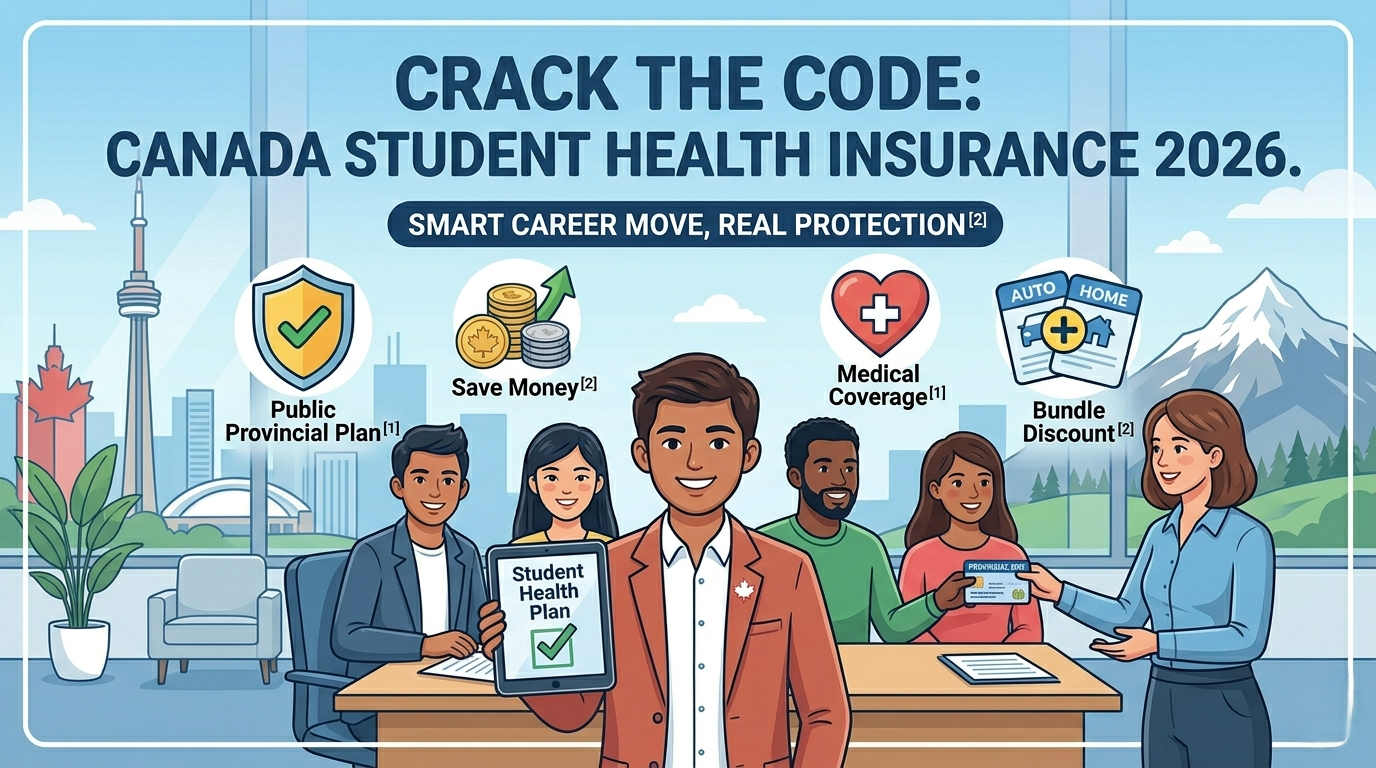
You’ve got your study permit, your plane ticket is booked, and you’re dreaming of Tim Hortons and snowy campus walks. But then you hear a horror story: An international student gets a sudden stomach ache, spends one night in a Canadian hospital, and walks out with a $5,000 bill.
Does Canada have “free” healthcare? Yes—but only if you know the rules. For international students, skipping health insurance isn’t just a bad idea; it’s a financial disaster waiting to happen.
Let’s make sure that doesn’t happen to you.
1. Why You Can’t Skip This (It’s Not Optional!)
In Canada, health insurance is mandatory. You cannot maintain your status as an international student without it.
Canadian healthcare is world-class, but it is incredibly expensive for non-residents. A single ER visit can cost more than a semester’s worth of textbooks. Insurance acts as your financial shield, ensuring a fever doesn’t turn into a debt crisis.
2. Public vs. Private: Which One Do You Get?
The most confusing part about Canada is that every province has its own rules. There is no “National” plan.
Public Provincial Insurance
In provinces like British Columbia, Alberta, and Saskatchewan, international students may qualify for the government’s public health plan.
- Pros: Usually covers doctor visits and hospital stays for free or a small monthly fee.
- Cons: Often has a “3-month waiting period” where you aren’t covered at all.
Private Insurance
In provinces like Ontario and Quebec, most students must use private insurance or a university-specific plan (like UHIP).
- Pros: Covers things the government doesn’t, like dental, vision, and prescription drugs.
- Cons: You usually have to pay the premium upfront.
3. The “Waiting Period” Danger Zone
This is the mistake that ruins lives. Many students think they are covered the moment they land at the airport.
If your province has a 3-month waiting period, you are uninsured for those first 90 days. You MUST buy a temporary private plan to bridge this gap. Imagine breaking an ankle while moving into your dorm—without that bridge plan, you’d be paying for it for years.
4. What Does a Good Plan Actually Cover?
Don’t just buy the cheapest plan you find. Ensure it covers:
- Hospital Stays & Emergencies: The most expensive part.
- Diagnostic Tests: X-rays, blood work, and MRIs.
- Repatriation: If you get seriously ill and need to fly back to your home country with medical staff.
- Prescription Drugs: Unlike some countries, medicine in Canada is not free, even with a doctor’s note.
Real-Life Example: Meet “Rahul.” He moved to Toronto and thought his university plan started immediately. He got a bad chest infection in his first week. Because he didn’t have a 1-month “traveler’s insurance” to bridge the gap, he had to pay $1,200 out of pocket.
5. How to Save Money on Your Premiums
- Check Your Tuition: Many colleges “auto-enroll” you in a plan. Don’t buy a second one unless yours is insufficient.
- Opt-Out if Possible: If you have better private coverage from your parents’ global policy, you can sometimes “opt-out” of the school plan to get a refund.
- Stay Healthy: Use the free wellness clinics on campus for minor issues before they become “Emergency Room” problems.
🏁 Conclusion: Your Safety is Your Success
Moving to Canada is a huge leap toward your future. Don’t let a medical emergency pull you back. Check your province’s rules today, buy a bridge plan for your first 90 days, and focus on what really matters—your education.
❓ FAQ Section
1. Is health insurance free for students in Ontario? No. International students in Ontario typically use UHIP (University Health Insurance Plan) or a private equivalent, which is charged as part of your tuition.
2. Can I use my insurance from my home country? Most Canadian hospitals prefer local Canadian private insurance or provincial cards. Foreign insurance often requires you to “pay first and claim later,” which can be difficult if the bill is thousands of dollars.
3. Does student insurance cover dental work? Provincial plans (Public) usually do NOT cover dental. Most University-led private plans cover basic cleaning and emergency extractions, but not major surgery like braces.